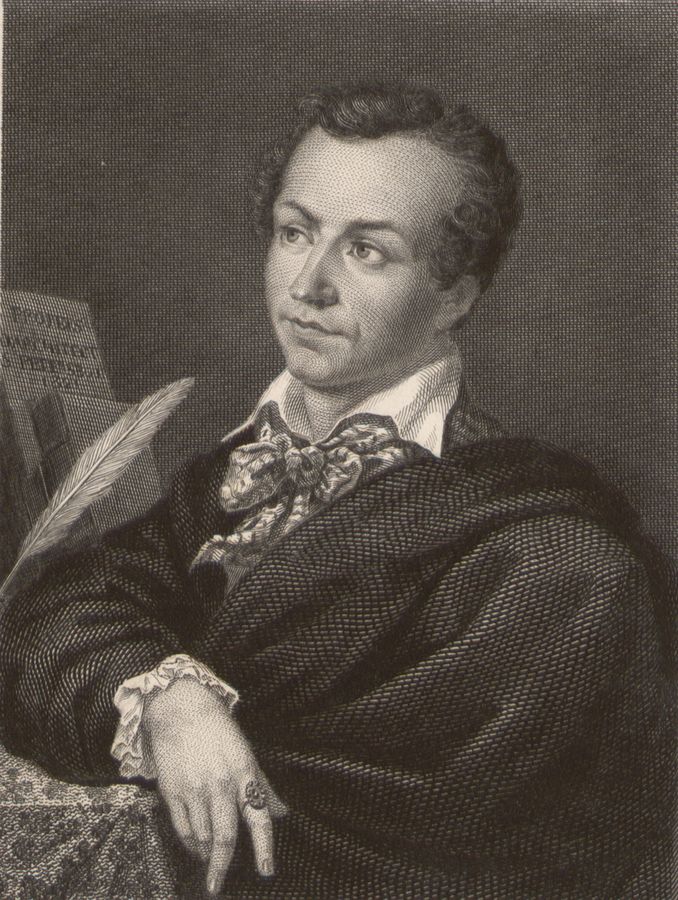
Antonin CarêmePierre François Léonard Fontaine, 19th century. Public domain. Bibliothèque Sainte-Geneviève via Wikimedia Commons. Image source
Carême sorts out the great sauces
1800s to 1833 · Marie-Antoine (Antonin) Carême (1784 to 1833)
Marie-Antoine Carême, known as Antonin, was born into a poor family in Paris in 1784. He started out as a kitchen helper in a Paris restaurant, then moved to a fashionable pastry shop, where he learned the pastry trade.
Carême studied architecture and became famous for pièces montées, huge table centrepieces made of sugar and pastry and shaped like temples and ruins. His creations reached the table of Napoleon. He went on to cook for the statesman Talleyrand for twelve years, the Prince Regent of Britain (later King George IV), Tsar Alexander I of Russia and, for seven years, Baron de Rothschild.
His biggest gift to cooks was order. Carême wrote big illustrated books to pass his methods on, and he grouped the sauces of French cooking into four grandes sauces: espagnole, velouté, allemande and béchamel. Many smaller sauces could be built from these bases.
Later chefs, including Auguste Escoffier, reworked his list into the five mother sauces taught in culinary school today. Carême died in Paris in 1833 while still working on his last book, L'Art de la cuisine française au dix-neuvième siècle. Its final volumes were completed by another chef, Armand Plumerey.
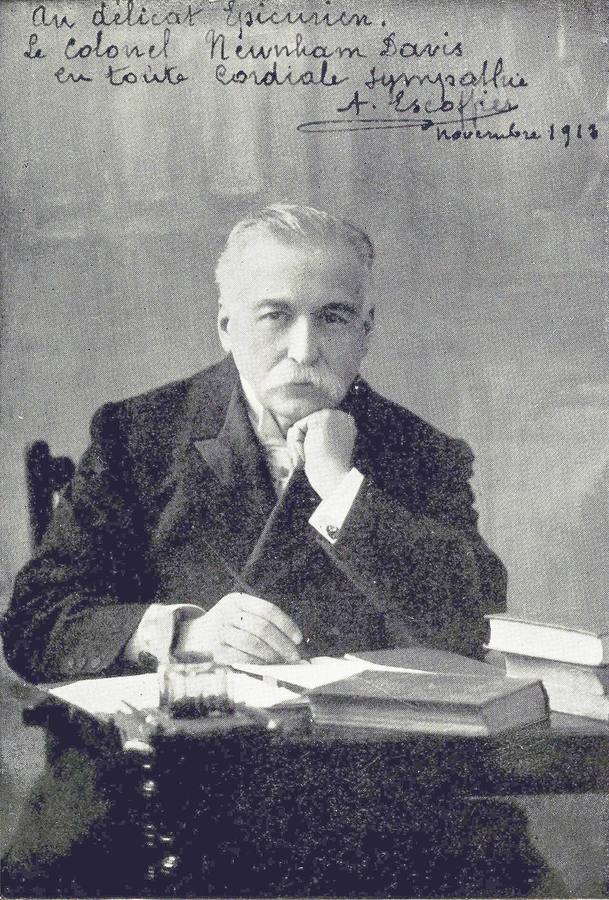
Auguste Escoffier, from The Gourmet's Guide to London (1914)Unknown photographer, 1914 or earlier. Public domain. Wikimedia Commons. Image source
Escoffier builds the kitchen brigade
1890s to 1903 · Auguste Escoffier (1846 to 1935)
Auguste Escoffier was born on 28 October 1846 in Villeneuve-Loubet, a village between Cannes and Monaco in the south of France. His father was a blacksmith. At 13 he started work in his uncle's restaurant in Nice.
During the Franco-Prussian War of 1870 to 1871 he was head chef at an army divisional headquarters, and he was taken prisoner at the siege of Metz. Those army years later shaped how he ran a kitchen.
In 1890 he took charge of the kitchens at the new Savoy Hotel in London, which was run by the hotelier César Ritz. There he organised the cooks into a brigade de cuisine. Each station handles one part of the menu, such as sauces, fish, roasts or pastry, and is run by a station chef who answers to the head chef. Dishes are built step by step across stations, so a big order can go out hot and on time. Big kitchens already had specialised cooks, but Escoffier's clear, military-style version is the one that spread.
At the Savoy in 1893 he created a dessert of peaches and vanilla ice cream for the opera singer Nellie Melba, later named peach Melba. In 1903 he published Le Guide culinaire, with five mother sauces and thousands of recipes. Chefs still use it, and the brigade system still runs kitchens around the world.
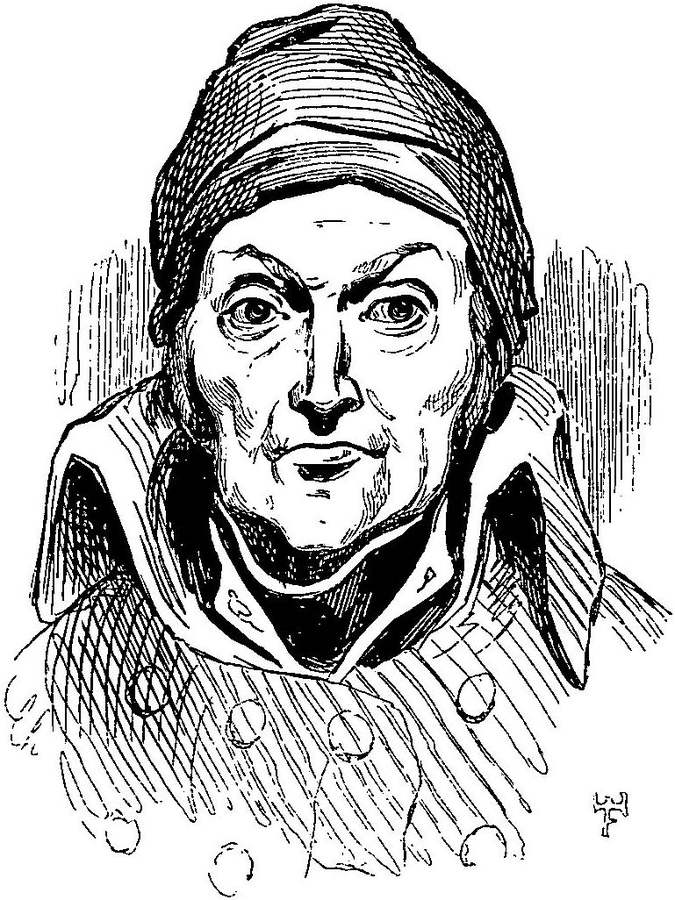
Nicolas Appert, engraving from 1841Édouard Foucaud, 1841. Public domain. Gallica (Bibliothèque nationale de France) via Wikimedia Commons. Image source
Nicolas Appert seals food in a jar
1795 to 1810 · Nicolas Appert (about 1749 to 1841)
Before canning, keeping food meant drying, salting, smoking or pickling it. Fresh-tasting soups and vegetables could not be stored for long, which was a big problem for armies and navies.
Nicolas Appert was a French chef, confectioner and distiller, born around 1749 in Châlons-sur-Marne. In 1795, inspired by a French government offer of a prize for a way to preserve food for transport, he began fourteen years of experiments.
His method was simple. He packed food into thick glass bottles, sealed them tight with cork and wax, then heated the bottles in boiling water. Soups, vegetables, fruit, juices, dairy and jams all kept for months.
In 1810 the French government awarded him 12,000 francs on one condition: that he publish his method for everyone. He did, that same year, in a book translated as The Art of Preserving All Kinds of Animal and Vegetable Substances for Several Years. He used the money to open a cannery, the House of Appert, at Massy near Paris. Also in 1810, Peter Durand in England patented the idea of using tin cans instead of glass.
Appert never knew why his method worked. Decades later, Louis Pasteur showed that microbes cause food to spoil and that heat kills them. Every time a cook processes jars or follows a safe heating time, they're using the idea Appert proved by trial and error.
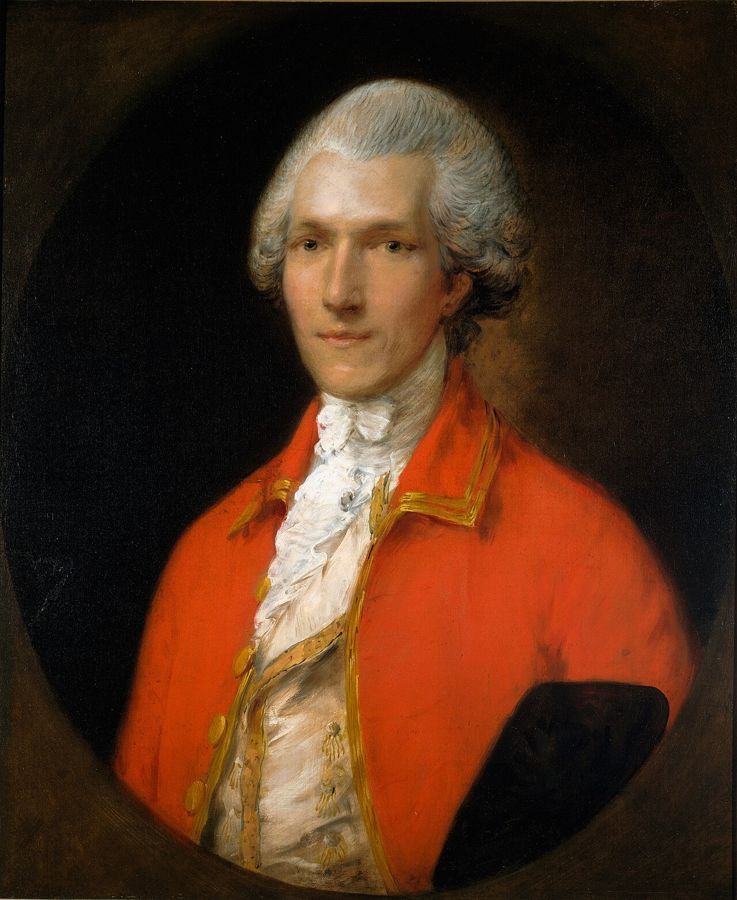
Benjamin Thompson, later Count Rumford, painted by Thomas Gainsborough in 1783Thomas Gainsborough, 1783. Public domain. Harvard Art Museums (Fogg Museum) via Wikimedia Commons. Image source
Count Rumford closes in the kitchen fire
1790s · Benjamin Thompson, Count Rumford (1753 to 1814)
For centuries most cooking was done over an open hearth. Pots hung over the fire or sat in the embers, and most of the heat went straight up the chimney. Cooks worked in smoke and heat, and fuel was expensive.
Benjamin Thompson was born in Woburn, Massachusetts in 1753. He sided with the British during the American Revolution and later went to work for the ruler of Bavaria, who made him a count. He took the title Count Rumford.
In Munich he set up workhouses for the poor and had to feed large numbers of people as cheaply as possible. That led him to study how kitchens wasted heat. His answer was an enclosed brick range. Each pot sat in its own opening over its own small fire, with its own ash pit, its own air door to control the draught, and a flue to carry the smoke away. A cook could run several fires at different strengths and close down the ones not in use.
He also designed the Rumford roaster, an iron oven set into brickwork with heat carried around it. In 1799 he published an essay on the construction of kitchen fireplaces and kitchen utensils. Closed ranges based on his ideas spread through Europe and North America, and every modern range with separate burners and controls follows the same thinking.
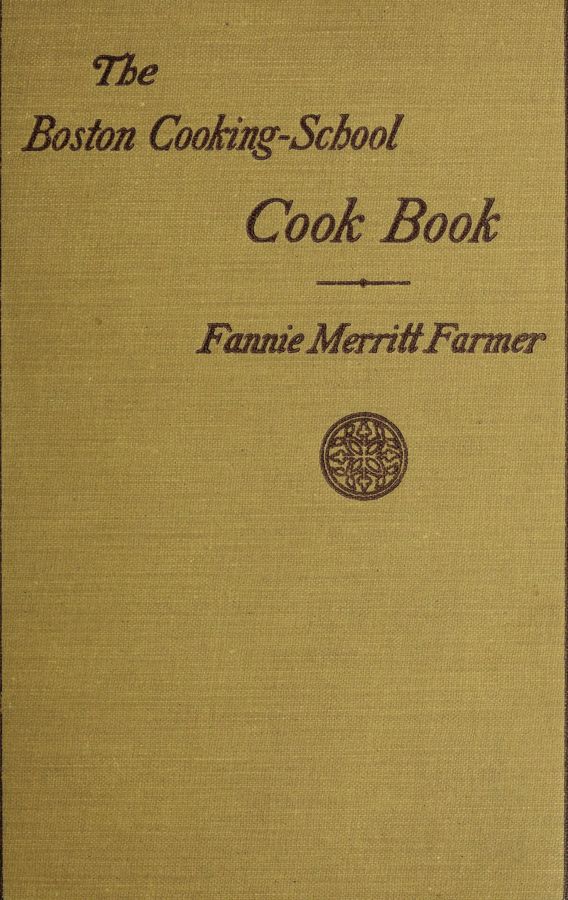
Cover of The Boston Cooking-School Cook Book, 1919 revised editionFannie Merritt Farmer; Little, Brown and Company, 1919. Public domain. Smithsonian Libraries copy, Internet Archive, via Wikimedia Commons. Image source
Fannie Farmer levels the measuring cup
1896 · Fannie Merritt Farmer (1857 to 1915)
Old recipes often asked for a handful of flour, a heaping spoon of sugar or butter the size of an egg. That worked if you already knew how the dish should turn out. If you didn't, it was guesswork.
Fannie Merritt Farmer was born in Boston in 1857. A serious illness in her teens kept her at home for years, and in 1887 she enrolled at the Boston Cooking School. She graduated after two years, stayed on to teach, and later became the head of the school.
In 1896 she published The Boston Cooking-School Cook Book. Its recipes used standard cups, tablespoons and teaspoons, and Farmer insisted that every measure be level, scraped flat across the top with a knife instead of heaped. Measurements could be as exact as seven-eighths of a teaspoon. The book became a huge seller, with around 360,000 copies sold by the time she died in 1915.
In 1902 she opened Miss Farmer's School of Cookery in Boston, which taught home cooks, nurses and professionals. Her book, later called The Fannie Farmer Cookbook, is still in print. Every recipe card with exact, level measures owes something to her.